


Good afternoon, everyone. Welcome to another West Coast edition of Feed Me. 🌴
Last night I watched Jonathan Demme’s Married to the Mob. Alongside the perfect 1988 cast of Michelle Pfeiffer, Alec Baldwin, and Matthew Modine, was a young actor in his debut role: Oliver Platt. In one of my favorite types of twists (sibling excellence), Wikipedia revealed Oliver to be the brother of one of the best food critics of our time, Adam Platt. I thought to myself, Their parents must be so proud.
After poking around Adam’s Instagram, I learned that their father Nicholas Platt lived to the age of 90, and passed away less than a week ago. I read Adam’s essay dedicated to this fascinating man — diplomat, leader of the Asia Society in New York City, Harvard grad, speaker of several languages — and thought about how the old guard of US Foreign service was so damned educated. I don’t want to be too nostalgic for a different kind of elite, but I can’t help but think how things might be different if we still had diplomats like this today. (A few books have been written about this.)
Nicholas Platt, what a great 20th Century life. He and his wife raised incredible kids.
Today’s newsletter includes: Los Angeles mayoral candidate Nithya Raman answers your questions, an SF entrepreneur is looking to pay a personal assistant $180k, a luxury hotel nightmare, a review of the Nob Hill Spa at the Huntington Hotel, a hot girl book club, Bernard Arnault discovers the power of X, and Stephanie Danler’s new dark novel about wealth and privilege in LA.
Have a story you want me to include in the newsletter? Respond to this email or text the Feed Me Tip Line: 1 (646) 494-3916
Guest Lecture: Nithya Raman
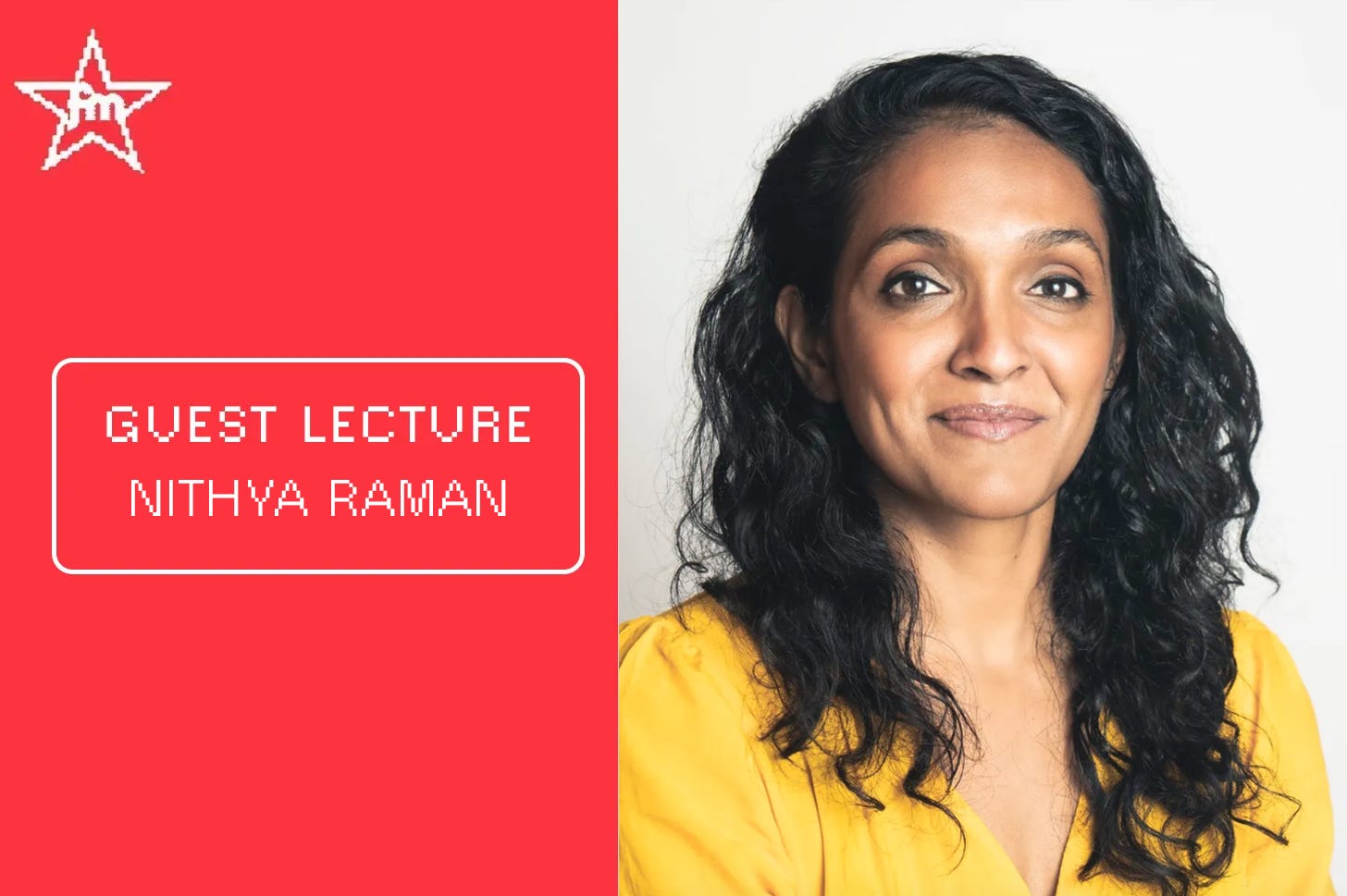
This interview is part of a Feed Me feature called Guest Lecture. In this series, I introduce you all to an expert who I’m curious about, and give paid readers an opportunity to ask them anything they want. Past guests have included Jeremy O. Harris, Recho Omondi, and Jeff Klein. Today, we’re talking to Nithya Raman.
In early June, Nithya Raman, an urban planner, activist, and Los Angeles City Councilmember finished second in the L.A. mayoral primary (slightly behind sitting L.A. mayor Karen Bass and slightly ahead of non-mayor Spencer Pratt), setting up a runoff with Bass in November. Bass, who is the first incumbent L.A. mayor since 2005 to face a runoff, has a formidable challenger in Raman, who is young (44), unapologetically progressive (she’s been endorsed by the DSA), and attracts natural comparisons to Zohran Mamdani.
Raman is running on a platform of, among other things, reducing street homelessness in L.A., increasing and speeding up housing production, tackling affordability, and helping revive the film and TV production industry in L.A. She lives in Silver Lake and won overwhelmingly in the East Side neighborhoods we cover regularly in the letter. It felt like a good time to get your questions to her.
“How do you and some of the intellectual heavyweights you have in your corner aim to combat the persistent narrative that ‘urban disorder’ is a byproduct of progressive governance and something excessively tolerated/not addressed by progressives in power?” — Edward
I could give you a more ideological answer, but the truth is that the only convincing response is to demonstrate results.
I am a proud progressive. I believe in the power of government to do good, and I believe in the power of government intervention to solve problems and make our lives better. But that means that progressives actually need to do more than other politicians to deliver results for people. This cannot be a political project of asking people to accept less.
People want clean and safe streets. They want 911 to answer. They want garbage picked up and street lights fixed and city services to work. Those aren’t conservative demands. They are basic expectations of government.
And in Los Angeles, people want homelessness addressed. Angelenos have proven over and over again that they believe in a progressive vision of how to address homelessness: This is a city where people have voted three times in the last few years to tax themselves to provide housing and shelter and services for people on the streets. We owe it to every person on this city’s streets and to every voter and to every taxpayer to really build a response that works to end this humanitarian crisis and keep our streets safe, healthy, and clean for all.
This is why I have worked so hard to bring down homelessness in my district every single year that I have been in office. This is why I worked to ensure that shelter beds and permanent supportive housing units are full every night.
That is what progressive governance should look like. Treating people with dignity. Changing the political norms so that we don’t hide data that voters won’t like, but that we are honest and transparent about what we are doing well and where we are falling short so we can actually fix things. And doing all of this to actually deliver a safer, cleaner, healthier city for all.
“A mayor’s first responsibility is to the people who live in their city. I don’t think mayors need to issue a statement on every event happening around the world, particularly when they have no power to affect the outcome.
But Los Angeles is a global city. More than one in three Angelenos is an immigrant, and people across this city have family, history, and deep ties all over the world.”