


Good afternoon everyone. I drank a Guinness at 11am today for a project that will soon be announced. Apologies for any typos.
Today’s letter includes: Delia Cai on why nobody could’ve charged for a link aggregation email in 2016, East Village guys are taking sartorial risks in order to dress like JFK Jr., POOG Podcast at London Fashion Week, Boy Smells bottled up the bathhouse boom.
Guest Lecture: Delia Cai
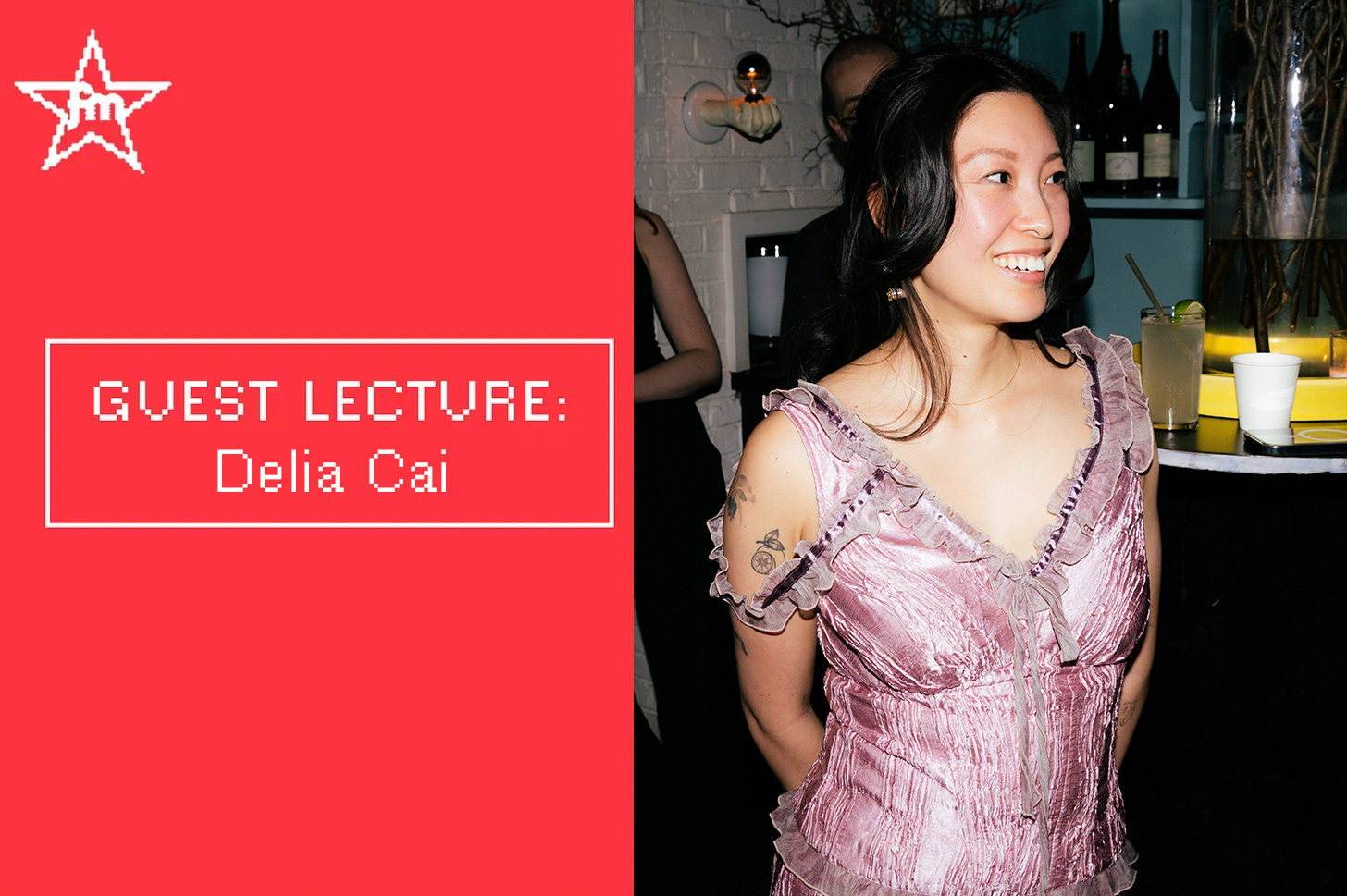
This interview is part of a Feed Me feature called Guest Lecture. In this series, I introduce you all to an expert who I’m curious about, and give paid readers an opportunity to ask them anything they want. Past guests have included Lina Khan, Andrew Ross Sorkin, and Audrey Hobert.
Today, Delia Cai, writer of Deez Links, answers your questions about how she decides what goes in her newsletter, planning events with the Substack team, and how her feelings about newsletters have changed over the last ten years.
“Will Welch talked about this amazingly and plenty from an editor’s POV but since you have also interviewed plenty of musicians/famous personalities that define cultural moments, it would be cool to learn about this from a writer’s POV.
In a world of social media where famous artists, musicians, or any personalities that already have a large audience – one they can speak to directly (moreso, even monetize it for themselves) how does a writer and publication demonstrate the value of their coverage? How do you make a subject feel that your perception/profile of them holds value and will discover or broadcast something they couldn’t on their own?” - Yanit
When I first started writing at Vanity Fair, my editor Matt Lynch almost always gave me the same note: context, context, context. He was constantly reminding me that perhaps the most important part of any profile (or really, any story) was to be able to succinctly describe why this person or topic was worth the reader’s attention — and why now.
It’s now one of the most common notes I also give when working with writers myself, because any feature must answer the most implicit question of all, which is “Why should you, the reader, care about this one topic in the broad scheme of things?” Because of course we’re swimming in a deluge of self-promotional messages that everyone is already broadcasting. But no one is ever that good at answering that question themselves. Clavicular can go live until he’s blue in the face, but he’s never going to personally give you a nuanced, sociological read on why live-streamed masculinity is having a moment. Subjects need to be perceived by a third party (ideally a writer with a snappy voice, journalistic integrity, and world-class bullshit detection) for us as a public to make sense of them.
Clout/hype/success is never some entirely self-driven phenomenon. It relies on a delicate web of collab posts and institutional co-signs and of course, advertiser dollars — the latter of which depend a lot a lot on the imprimatur of traditional press.
“Delia, how do you decide on what to include in a letter/what are your routine media sources?? Has that changed significantly in 10 years? Also how do you think your roles in legacy media relates to how you run Deez and vice versa?” - Teddy
I used to just sit on Twitter all day and let that be the primary funnel; now my media diet is more so reading favorite sites, newsletters, and group chats to pick up signal on what’s interesting or worthy. The clearest sign that something is worth linking to in Deez Links is when I find myself automatically texting it to friends and wanting to burn up the whole morning talking about it; that’s when I know I have Thoughts and Feelings (and that likely, others will too).
In terms of the influence of working in legacy media…I do feel more pressure to highlight things that are more conventionally in the “news cycle” or that I know other people/newsletters are talking about as a way of “keeping up” or staying relevant. But I am sure you can tell when it’s forced like that. The newsletter always always always works better when I default to the sniff test of like, do I actually want to gossip about this thing to my friends in the chat?
But also, after working in legacy media, I do have a deep fear of image copyright issues. It’s funny to me to watch a lot of newsletters happily grabbing screenshots, etc. from Getty Images or whatever; to me that is very brave! After getting drilled on the ins and outs of image rights at BuzzFeed, amongst other jobs, I’m too scared for all that. So Deez Links is largely unillustrated.
“Hi Delia, Deez Links has always had a super fun/distinct voice, which especially now feels rebellious. How do you decide which topics are worth your perspective, versus just worth the link? How has that changed over the past ten years, or how has your approach to curation changed?” - Ray
A lot of the links I go long on start out as just a regular link + description, but then I’ll find myself writing like three or four or 15 paragraphs on it, and realize oh, okay, I have a lot more to say other than just “this is worth reading!” I probably had more intention when I started out — real “I’m going to write the definitive essay on XYZ” ambitions — but I honestly felt like I didn’t really have the juice once I actually got going on those. You have to let the obsessiveness sneak up on you.
I also used to make myself read/link to things that felt “necessary” in terms of like, here’s the syllabus today. But that kind of felt like trying to win the Empathy/Informed Olympics. So I think I’m trying to avoid more of the obvious (yet still necessary) stuff and surface the gems you probably aren’t seeing yet.
“Frankly, in 2016 there is no way any of us could have charged money for a link round-up!”