


Good morning everyone. Last night I went to my friend Krithika Varagur’s birthday party at FishMarket II on Avenue A. In the corner of the bar, a stack of books she was gifted throughout the night grew higher and higher. I’ll ask her to share the titles with us if they were any good.
Today’s letter includes: Lina Khan answers your questions, TBPN has no plans to become Barstool, the stamp store where New York businesses like Colleen Allen and Michael’s are shopping, a holiday party for New York’s top “New York’s top builders and investors,” and Substack wants you to try out livestreaming.
BUT FIRST! Teddy Kim on Netflix’s deal to buy Warner Bros. and HBO
“I’ll write a longer piece about this but it’s stunning to finally see this happen, 15 years after Jeff Bewkes’ notorious ‘Albanian army’ dig. Netflix has been dying to get its hands on premium IP for years. You can already find a bunch of HBO shows licensed on Netflix, but if the deal goes through, they’ll acquire one of the best IP libraries in the business: Lord of the Rings films, Harry Potter (with an upcoming TV show), and the DC superhero franchise. The big question is if the deal goes through. You can expect Paramount and the Ellisons to flex their political muscles to block the deal. On the other hand, the $5 billion reverse breakup fee Netflix is committed to pay, on the high end at 7-8% of deal value, suggests they’re pretty confident it’ll go through. While it’ll be nice to not have to pay for both, you can guarantee the price will go up for a combined Netflix/HBO service. It’s also hard to imagine the deal being good for creatives. Theatrical windows will shorten, consumers will be trained even more to think of movies as streaming products instead of theatrical experiences. The top directors and stars who can afford it will take their business to a studio that will give them the releases that they think their movies will want. Everyone else will take what they can get.” - Teddy Kim
📱 Have a story you think we should look into? Text the anonymous Feed Me Tip Line: (646) 494-3916
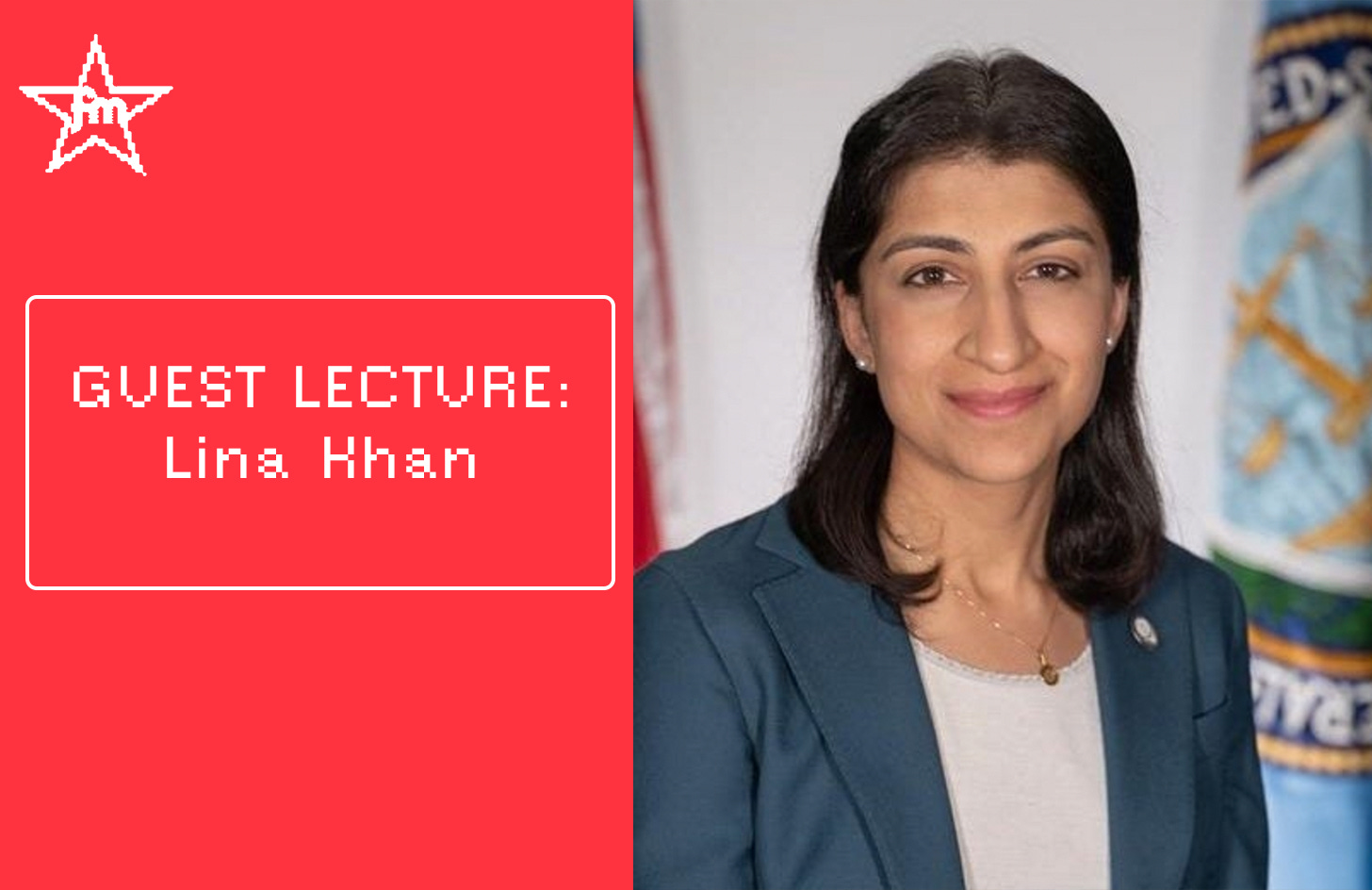
This interview is part of a Feed Me feature called Guest Lecture. In this series, I introduce you all to an expert who I’m curious about, and give paid readers an opportunity to ask them anything they want. Past guests have included Olivia Nuzzi, Andrew Ross Sorkin, and Kareem Rahma.
Today, Lina Khan (who served as the youngest Federal Trade Commission chair ever from 2021 to 2025, and was recently appointed co-chair of Zohran Mamdani’s transition team) answers your questions about Adam Friedland’s furniture, her favorite law, and why private equity roll-ups “deserve an enormous amount of scrutiny.”
“Mayor-elect Mamdani and Lina Khan are both known for the ways they engage so personally; Mamdani is everywhere all over the city, and Khan famously conducted extensive listening tours. Beyond shaping the substance of policy, why is this kind of human-centered approach so important to grounding their successes? Why are these so-called soft skills so critical at this moment?” – Amy
“It’s no secret that wealthy and powerful interests often have disproportionate access to government leaders, be it in DC or New York. This can distort how government leaders think about policy. It can also create major blindspots, skewing how top officials understand what challenges and problems working-class people face in their day-to-day lives.
Mayor-elect Mamdani displayed a real interest in understanding what life is like for a broad array of New Yorkers—be it halal truck vendors or families trying to find affordable childcare. Being curious and wanting to learn from the people you serve is important for diagnosing problems and understanding economic realities. Similarly at the FTC we prioritized opening up the agency’s doors—holding regular listening sessions and open commission meetings where any American could come speak directly to the FTC commissioners to explain which economic problems they believed we should be addressing or to give feedback on our ongoing work.
Through this public engagement we heard from everyone ranging from family farmers facing unfair repair restrictions to independent pharmacists being squeezed by major healthcare conglomerates to parents whose kids had taken their own lives after facing abuse on social media to people who were having to skip life-saving medicines because of the exorbitant cost. Regularly hearing from people who don’t usually get a seat at the table in policy discussions gave us a deeper understanding of how Americans are faring in today’s economy and let us develop a more well-informed view of how the FTC should be prioritizing its work.”
“What is the most underappreciated cost of market concentration that regulators and economists still fail to account for?” – Teddy
“One of the most striking effects of concentrated corporate power is fear. I first noticed this when I was a business reporter interviewing chicken farmers in rural Alabama. As mergers have resulted in fewer and fewer firms dominating agriculture markets, chicken farmers often can only do business with a single regional poultry processor. Practically this means that a farmer’s entire economic livelihood can depend on staying in the good graces of a dominant middleman. This type of concentrated power is ripe for abuse, and farmers can face a real threat of retaliation if they push back against unfair contractual terms or even report abusive practices to the government.
Fear of the arbitrary exercise of coercive power is strikingly common across the economy. Small businesses can live in fear of being delisted or demoted by Amazon or Google. Millions of workers captive to a noncompete clause can find themselves locked in bad jobs, fearful of the consequences if they try to leave. Ride-share drivers often fear arbitrary deactivation of their app. Concentrated economic power can be used to coerce people—and one reason we have the antimonopoly laws is to safeguard against coercion and ensure people can experience real freedom.”
“During your time leading the FTC, what is the one concrete thing you changed or got done that you think will be most enduring?” – Renée
“One of the clearest examples is the work we did to reduce the cost of asthma inhalers. Roughly 40 million Americans rely on inhalers to breathe, yet some of the most widely used products were costing patients $500 or more every month—even though the exact same inhalers cost less than $20 in some other countries. When we started digging into why, we found that several major pharmaceutical companies seemed to be abusing the Orange Book, the FDA’s list of drug patents. When a manufacturer lists a patent in the Orange Book, it delays the approval of a generic competitor for 30 months. We found that some companies were exploiting the system, filing junk patent listings for dose counters, inhaler caps, nozzles, or other device components (rather than drug ingredients themselves) in order to box out competitors and keep prices high.
We challenged these junk listings—and, in response, several major pharma companies announced they would cap out-of-pocket costs to $35. We’ve heard directly from people all around the country about what a game changer this has been, saving them hundreds of dollars at the pharmacy.”
“For local groups in metro areas across the country, what would you recommend as a playbook to repeat your successes tangibly helping consumers?” – Emily
“As the federal government drops the ball on protecting Americans from predatory and exploitative business practices, it’s falling on state and municipal governments to step up. We see more states passing laws to curtail or outright ban abusive business practices and to sharpen enforcers’ tools to take on corporate abuse. For example, New York recently codified a state-wide ban on algorithmic rent-fixing.
As a general matter, fully canvassing existing legal authorities can be a useful way of finding laws already on the books that should be vigorously enforced. Most states already have “mini-FTC Acts,” giving them parallel authority. Our FTC work laid out a template that local governments can follow—including on how to take on subscription traps, junk fees, dark patterns, noncompetes, and other exploitative tactics.”