


Hello, everyone.
Today’s newsletter includes: A Guest Lecture with Mark Zuckerberg (including a conversation we had on Zoom), Cannes IV drips gone wrong, and Ina Garten is launching a podcast with Vox.
I’m writing to you from the floor of my apartment in Cannes, eating truffle potato chips and salami. The best way to describe the situation here for those who have never been is Disney World for advertisers, but instead of Mickey Mouse and Cinderella, people geek out over Gary Vaynerchuk and Alex Cooper. The whole festival appears to run on bottles of rosé, which is offered at all times to remedy boring conversations, gaps in the calendar, and the heat. I’m having a blast.
Last night, I stopped by The New York Times dinner hosted by Andrew Ross Sorkin before heading to my own dinner that I hosted with Yahoo. I’ve been working with the Yahoo team for the last few months, and I’ve grown to really admire their CEO Jim Lanzone and chief communications officer Sona Iliffe-Moon (who happened to also be in the WSJ last week). It might’ve been my own espresso martini buzz, but I got a little emotional while watching a (bear with me) drone show with Casey Lewis, Alex Heath, Rachel Karten, Risa Heller, Jack Raines, Ana Andjelic, Beehiiv founder Tyler Denk, Willa Bennett, and Serena Kerrigan all in one place — that place being the Yahoo Explorers Society on La Plage du Martinez. My night ended at 1 a.m. by finishing my last drink at Hotel Du Cap with one hand, and shaking Scott Galloway’s hand with the other.
Here’s what I’ve done today so far:
Spotify Beach hired the world’s best coffee maker, Victor Delpierre, to run the coffee situation at their Cannes set-up. I met him yesterday and was amazed by his coffee skills, so we went back this morning to work and drink more coffee. MVP of my week so far.
I spoke at Hearst House with Willa Bennett, editor-in-chief of Cosmopolitan and Seventeen, and Michael Sebastian, editor-in-chief of Esquire. We were discussing the metrics of a successful media business, and all agreed that one of the most important ones for a leader is unseeable to the rest of the world — the emails and notes from readers who tell editors directly how a publication’s work makes them feel. Afterwards, I met a group of young women from the University of Georgia who are studying abroad in France this summer. Ate a mini chocolate croissant and left.
Sat in the air conditioning at UTA Beach and drank water, while eavesdropping on other people’s hangovers.
Adobe hosted a “Group Chat,” a format I really enjoyed. They brought together creators like Sammi Cohen and iJustine to discuss “scaling content and reaching new audiences.” They seated each of us at separate tables, and I sat with several newsletter writers and business creators and talked about building a business on Substack. A big topic throughout this week thus far has been taste, developing creativity, and standing out in a sea of content. On the walk home, I got an ice cream cone and thought about how long I’ve been using Adobe products to build my projects. In 2020, I applied for a creative grant for $2,500 to make my documentary, The End. I got it, and it ending up unlocking my ability to book an Airbnb in Montauk for me and my friends to go out to Long Island and shoot the film.
I just took a nap and ate some strawberries and drank a Coke Zero, and will be back with more updates from the South of France tomorrow.
Have a news tip from Cannes, New York, or London? Hit the Feed Me Tip Line: (646) 494-3916
Guest Lecture: Mark Zuckerberg
This interview is part of a Feed Me feature called Guest Lecture. In this series, I introduce you all to an expert who I’m curious about, and give paid readers an opportunity to ask them anything they want. Past guests have included Jeff Klein, Mark Guiducci, and Audrey Hobert.
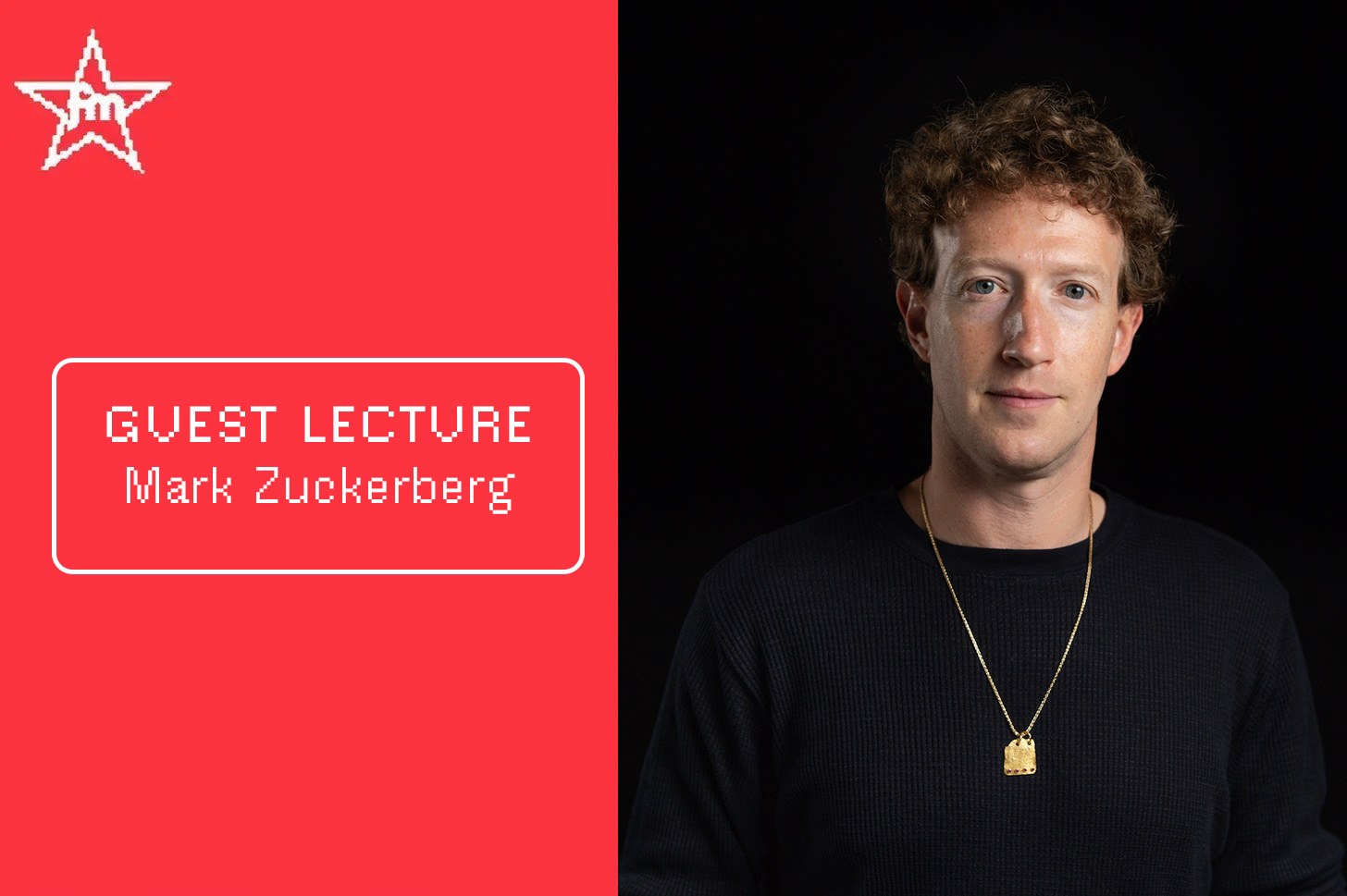
Today, we have a rather surreal guest, Mark Zuckerberg. He answers your questions about Harvard style, “not getting” wearables, and the most interesting things he’s thinking about that nobody is asking him about.
“Social feeds have gone from people you know, to creators you follow, to AI recommendations, to AI-generated content. Is the end state a feed where almost nothing was made by a real person? And is this the goal, or a side effect you’re okay with?” - Brad
Yes, feeds have evolved, but we still design our products to help people connect. Today, a lot of that happens through messaging rather than directly within the feed. Previously someone would post, and you’d comment on that post, and that would be the interaction. Now, feeds act more as a discovery engine where there’s content from your friends, from creators, and increasingly content that’s either been created with AI or by AI, and that’s all in service of helping people learn about the world and find content that helps them connect with their friends.
Even as feeds have changed, the content that typically does the best has a voice or perspective that’s unique and genuine to the person posting it. That’s true on our platforms, it’s true here on Substack. And so I think that human creativity is always going to remain a big part of social feeds.
"I’ve never really bought into wearables because ‘I can just use my phone,’ and don’t want to lug around other devices. How do you make the pitch to folks to add another device? Or: is Meta’s wearable tech trying to move in the direction of being a better version of the phone, i.e. replacing the phone, instead of adding to it?” - Zach
I don’t think phones are going to go away completely, but I do think that glasses will be the next major computing device. Today, when I’m sitting at my desk with a computer in front of me, I still reach for my phone to do a lot of things. In the future, I think you’re just going to do more and more stuff on your glasses, so even if you have your phone in your pocket, you’re not going to pull it out. And eventually you may leave it home more of the time. So I think eventually the question might be: “Why should I lug around my phone, when I have my glasses?”
Glasses are already something that almost 2 billion people wear every day -- people are used to using them in their daily lives. We know that we have to make sure that there’s a style for everyone so we’ve been building a pretty deep portfolio. We have over 70 options now so there’s a style that works for any occasion and at an accessible price point.
