


Good afternoon, everyone.
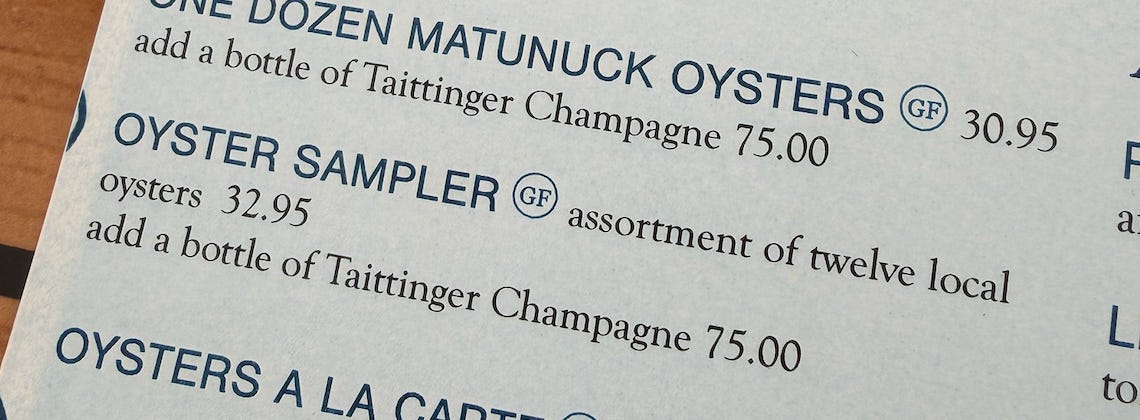
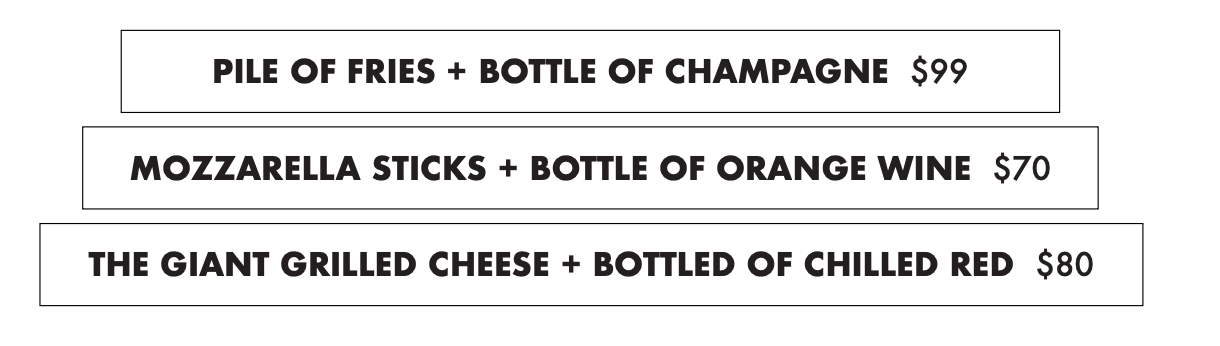
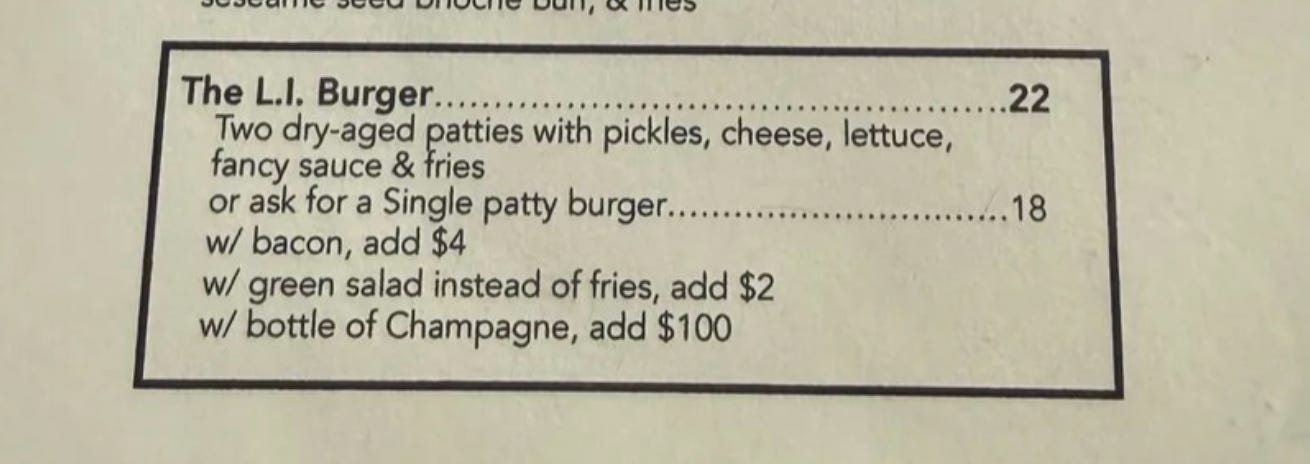
I’m back in the city after a New England weekend, including a wedding on Cape Cod. We stopped by Matunuck Oyster Bar on the drive, and they had my favorite category of add-on on the menu, the YOLO Bottle Add-On.
Today’s newsletter includes: An interview with Adam Iscoe about his new job at Notion, The West Village is getting a Negroni-bar-slash-slice-shop, a Caroline Calloway riddle, and Audrey Hobert’s latest brand collaboration.
☎️ Want me to cover a story in the newsletter?
☎️ Have a tip for me?
☎️ Need to tell me something?
Reply to this email or text the Anonymous Tip Line: (646) 494-3916
Adam Iscoe’s summer is off to a big start.
Last week, his story for The New York Times, about the average guys outsmarting Wall Street on prediction markets, was all over my newsfeed. On Wednesday, he produced a live conversation between Oscar Isaac, Bill Murray, and Lois Smith about loneliness and AI. This week, he’s starting a new job at Notion, the $11 billion tech company.
Adam’s new job is part of an ongoing wave of tech companies investing in their in-house storytelling and media teams. Earlier this year, OpenAI acquired tech news show TBPN, but they’d been investing in building a team with traditional media backgrounds for months before that.
To be clear, this isn’t new. Julia Kramer spent seven years at Condé Nast before working for Apple. Eva Chen spent nine years at Condé Nast before working for Instagram. Louisa Strauss spent seven years at Condé Nast before working at Apple. Campbell Brown spent over a decade at NBC News, and later led media partnerships at Meta. Sherwood News, the media arm of investing platform Robinhood, employs alums from The New York Times, Axios, and The Wall Street Journal.
I spoke to Adam today about clearing up the rumors (he’s not a tech bro) and why he thinks telling interesting stories within the walls of Notion is a worthwhile next move.
EMILY SUNDBERG: What exactly is your new job?
ADAM ISCOE: One way to describe the role is as a “member of the non-technical staff” at Notion, an artificial intelligence application company. Another is that I’ll be working on “special projects,” where one of my first big projects is helping people better understand what’s going on right now in A.I.-world (and the world more generally).
I don’t think many people really understand what’s going on with artificial intelligence. I think people are scared, and it makes sense. The world is changing—it’s changing faster than it’s ever changed before, and the pace of change is only increasing—but I don’t think we need to consign ourselves to doom. And I don’t think it helps when you have corporate executives proclaiming that A.I. will wipe out millions of white collar jobs, or that it will become difficult for a substantial part of the population to really contribute to the economy.
I’m not some crazy techno-optimist. At times, I find myself deeply, deeply skeptical about the promise of large language models. But I’m also a reporter, so I’m very committed to investigating what’s happening. I just want people to have a better sense of what’s going on. And I don’t think people understand what’s happening at the fabs or in the data centers or even at the labs—and I certainly don’t think people understand the application layer and what’s increasingly possible not just for banks and giant corporations but also for small businesses and the rest of us. I’m the first to admit: I’m new to all this, but my sense is, just like the photo camera and the telegraph and the telephone and the personal computer and the internet, artificial intelligence can be a good thing. I’m not interested in a vision of the economy in which everyone is forced into some kind of universal basic income because recursive self-improving A.I. has made them obsolete.