


Good afternoon, everyone.
This weekend, I figured out the best way to spend a rainy Friday night at a summer house by the beach: invite 12 friends over, set up a long table filled with chilly bottles of white wine, text Mo Scariano to come sleepover and cook a clambake for 12 said friends, say a rosary that the rain will end by the time the lobster goes in the pot, and let it rock. You can see the results here.
Today’s newsletter includes: I don’t like J.Crew’s new campaign, Sarabeth’s only has two locations left, I’m here for bringing more wellness practitioners to Substack, Olivia Nuzzi’s short film, a16z unfollowed TBPN on X, William Mullan’s Ultimate Guide to Yogurt and Late Summer Fruit, and Austin’s Matthew McConaughey Cinema.
For our next Guest Lecture, we’re talking to Chloe Malle, the Head of Editorial Content at Vogue. Paid readers can ask her anything about working in fashion media in 2026, her almost 16 years at Condé Nast, or her most memorable New York Fashion Week stories.
William Mullan’s Ultimate Guide to Yogurt and Late Summer Fruit
I can’t pinpoint when I met William Mullan, but I know my life is better because he’s in it for the past few years. I have a photo he took of a lamb, framed and hung on my office wall. It makes me smile every morning.
William is a man who is really guided by his passions — he works at Raaka Chocolate as their brand manager, but also knows more about New York City’s fruit trees and local dairy and home-fermenting than anyone I know. Last week, he posted on his Instagram Story that he was making a guide to late-summer fruit and yogurts to pair it with. I told him I wanted to publish it in Feed Me, and the below is what he put together.
In the 2003 François Ozon film, Swimming Pool, our protagonist, Sarah, played by the elegant and steely Charlotte Rampling, arrives in Lacoste, France, and proceeds to head to the village market, where she buys a massive tub of Taillefine, a Danone brand yogurt. She journeys back to the villa where she is writing her next novel, and proceeds to spoon the yogurt into a large glass bowl. After a couple of spoonfuls, she dumps the entire tub in the bowl. She sits on the couch, pops on the television, and eats the entire bowl. I have never resonated with a movie scene more than this one.
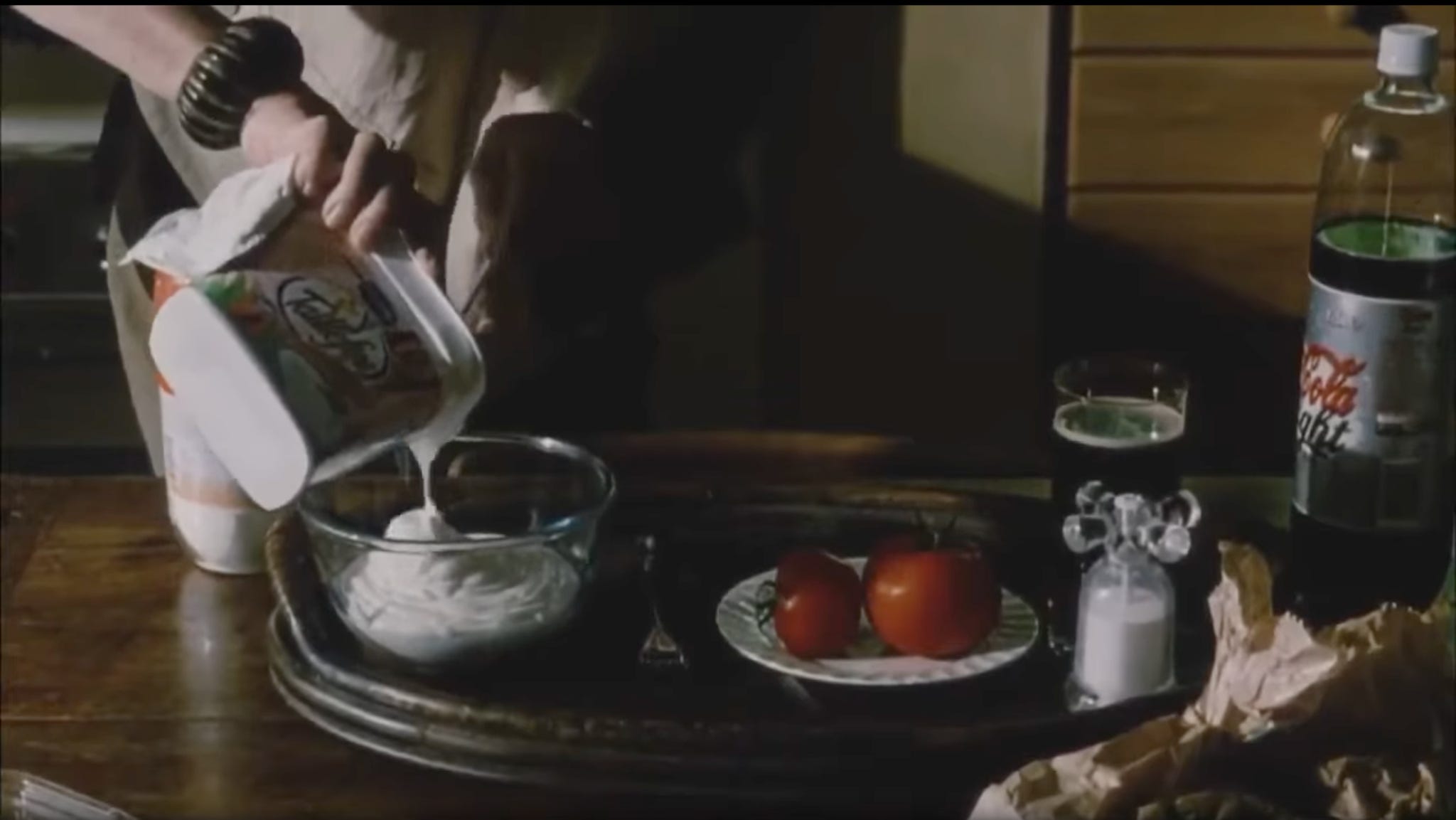

Sarah is an ascetic individual. Taillefine translates to “slender waist” in English, a hilariously specific name for a zero-fat, zero-sugar yogurt brand (identifying the body part is just so much more potent and direct than, say, SkinnyGirl Vodka). Her copious yogurt consumption is meant to portray her self-imposed repression. While I understood this, I saw no suffering in her meal. I saw only a big, beautiful bowl of globby white elixir, full of bacterial life and delicious tangy lactic acid. It was meant to make me sad; it made me hungry.
I tell you this so you understand that I know two things in this life: good yogurt and good fruit. I have eaten unholy amounts of both, and written books on the latter.
So, as we head into these final weeks of summer, it gives me great pleasure to pass on the wisdom of the best yogurt and summer fruit combinations to FeedMe readers. Like many millennial New Yorkers, I make my most ill-advised financial decisions in the summertime. But I’m not jet-setting to Marseille, I’m committing entire paychecks to small-batch yogurt, tubs of Maldon, and fresh fruit from the farmer’s market. I tell you this so you know that I have done the research, and you should trust me, and not The New York Times, which I will explain later*.
Let’s begin with what makes a good yogurt. The yogurt is our base, our body of Christ. It is the very foundation that we will build our own big, beautiful bowls on and therefore, like a painter, we must be specific about our canvas.
“This is not to say that I am a Fage hater. I eat it sometimes! As an Irish person, bland food is like a warm blanket to me, an old friend. I have lived off of microwaved potatoes when necessary, and always found Cormac McCarthy’s sentences about the plain, unseasoned beans eaten by his starving cowboys, outlaws, and their cadre, to be mouthwatering.”
Good yogurt is about body and tang. Both are the result of time, temperature, straining, and to some extent, good milk. Unfortunately, most supermarket brands favor body at the expense of tang. Much of this is driven by our cultural obsession with macronutrients and their ability to allow us to achieve that taillefine. But yogurt is not a supplement, it is a 2,500-year-old food passed on from genius Mesopotamian herders, who stored milk in animal pouches. While I think those herders would be astonished at the sorcery we’ve achieved with their invention, I think we should respect their work and not reduce their gifts to a set of numbers to be tallied like petty accountants. Energy in, energy out, yes, yes. But the body is more than a balance sheet.
This is all to say that my approach to yogurt is flavor first, and there is a crucial balance between body and tang that is to be respected, even across different styles: Greek, Bulgarian, Turkish, Armenian, French, Indian, etc, etc. No tang, no game.
So let’s start with tang, which for me, takes precedence over body. Tang is everything. Tang is life. In the case of yogurt, this is literal: the presence of tang is the direct result of bacteria and yeast turning sweet lactose into tart lactic acid. It means our spoon is full of beautiful bacterias that live in harmony with us and share our love of another species’ milk. Real freak shit. That’s how you know we’re homies. Generally speaking, it takes about 24 hours at the right temperature for our yogurt cultures, Lactobacillus acidophilus, Lactobacillus bulgaricus, and Streptococcus thermophilus among others, to eat up all that lactose. This is our primary fermentation step.
A yogurt’s body depends on its fat content and how it’s been strained. If you eat yogurt, especially Greek, you’re probably already familiar with straining. The whey and liquid are strained out, creating a thick, creamy globby goo. What we’re left with is mostly casein, which has just far less flavor than whey. If you’ve ever had the pleasure of drinking fresh whey, you know it is briney and tangy and goddamn delicious.
A good yogurt should be thick and creamy, with a sharp bite that makes your lips pucker and your jawline tingle. It should be cloud-like in the mouth, and clear the clouds in your head. Gentle but bright sunrays coming in through the window. You take a spoonful and you are awake now.
The two major issues with most commercially available yogurts is that the primary fermentation time is cut short, and in the case of Greek-style yogurts, too much whey is strained out. This is an effort to please the masses. The masses want protein. They want thick, dense yogurt that feels decadent. Sometimes the masses are correct, like when radio listeners made Mariah Carey’s “We Belong Together” #1 on the Billboard Hot 100 for 14 weeks. But sometimes, we are wrong, together. Such is the case with current yogurt tastes. No shade to Fage and Siggis, which I enjoy, but it’s time to grow up and accept that yogurt is sour milk and it should be SOUR.
This is not to say that I am a Fage hater. I eat it sometimes! As an Irish person, bland food is like a warm blanket to me, an old friend. I have lived off of microwaved potatoes when necessary, and always found Cormac McCarthy’s sentences about the plain, unseasoned beans eaten by his starving cowboys, outlaws, and their cadre, to be mouthwatering. We have established my penchant for finding the hedonic in the ascetic, the Dionysian in the Apollonian. But we don’t always have to live like this, and in the summer, we can live like kings and queens. I believe whatever or whoever is in control, if there is anyone or any force out there, intended this. Feast and famine, I suppose. So Fage can be okay, it can be good, even. There are simply much better options out there, and everything is expensive now anyway. But if you love Fage, these fruit combinations will work with Fage. Not Chobani, however. Chobani tastes like metal.
Before I tell you my favorite yogurts, the most flavorful and highest quality across various locations, I must tell you that all yogurt should be salted. A generous sprinkle of Maldon, whipped into the yogurt before garnishments and accompaniments are added, makes everything sing. Do not skip this step. If I accomplish anything here, it is turning you into a salted yogurt convert. The kind of person who sips Ayran between messy bites of watermelon slices.
Without further ado…
My Favorite Yogurts (in no particular order):
S-Tier: Supreme, the best, clears all competition
A-Tier: Excellent, top marks
B-Tier: Very good, if not exceptional
S-Tier National: