Hello everyone. Two months ago, Teddy Kim asked me if he could go to Sundance to cover the film festival for Feed Me. I told him to put together a pitch and a budget and send me an email.
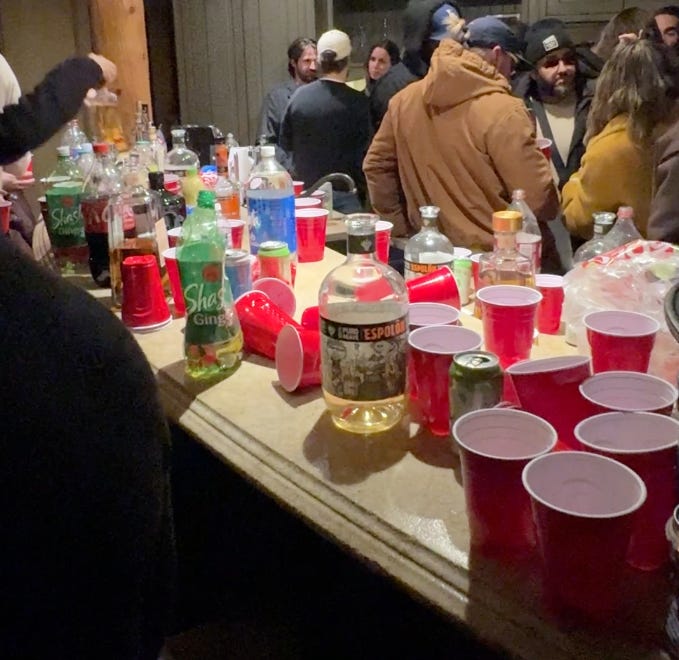
Teddy and I met in college — I was at SUNY FIT, he was at Harvard. We were in the backyard of my ex-boyfriend’s parents’ house on a warm summer night on Long Island, playing beer pong, surrounded by friends who could quote movie dialogue verbatim. I knew even then that it was all temporary, but I loved the little group we had while we had it.
Ten years later, Teddy and I reconnected. I came across his movie writing on Substack and asked him to write for me. Since then, he’s become a good friend. He was the first person to text me when the Mexican Navy ship crashed into the Brooklyn Bridge. He was the first person to text me that Charlie Kirk got shot. Our conversations aren’t about tragedy, there’s more of a patina to it than that. It’s more that he’s attuned to the kinds of moments that drop into the pond of culture and create the ripples I like to track.
Below is his dispatch from Sundance. There are three mentions of a man identified as “G—”, two mentions of Catholicism, one hangover, a visit to the Chase Sapphire lounge, and a possible solution to aging.
Today’s letter also includes: Audrey Gelman’s solo trip to Disneyland, an ominous resignation from an Anthropic researcher, Carbone’s Summer 2026 internship program, and I think it’s sad that Perrier — a beverage that once inspired Nas lyrics — launched a prebiotic drink.
Have a story idea for me? Reply to this email or text the anonymous Feed Me Tip Line: (646) 494-3916
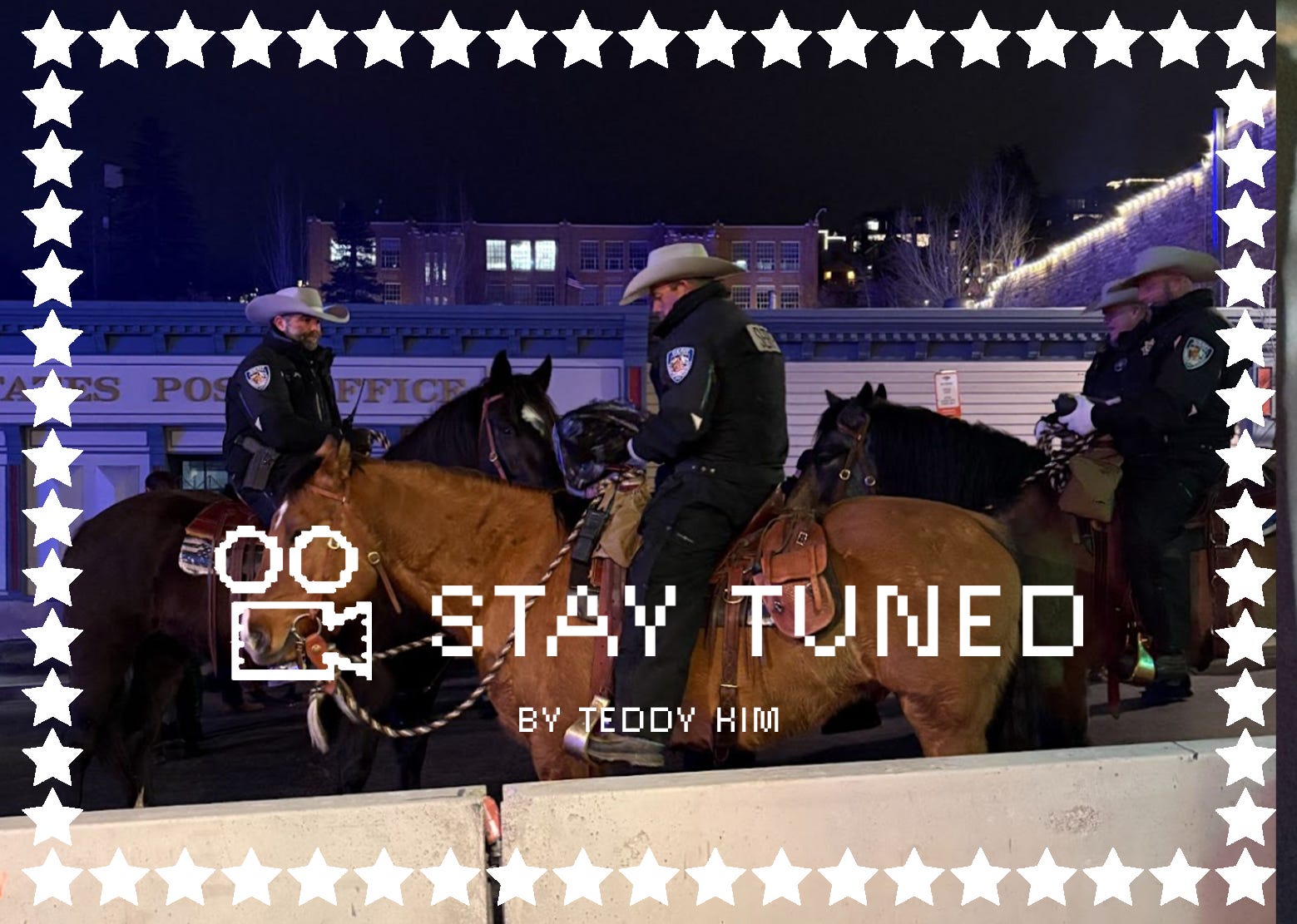
The Last Days of Sundance, by Teddy Kim.
“Butch Cassidy and the Sundance Kid are all dead now… but once they ruled the West!” -Butch Cassidy and the Sundance Kid (1969)
Thursday
For as long as I’ve loved movies, going to Sundance has been a dream, a pilgrimage. As I fly over the mountains, I take a moment to appreciate that I’m finally headed there. There’s a certain thrill in getting it together just under the wire. After all, this will be the last year of the festival in Park City, its home since 1981. But there’s a tinge of sadness as well. It’s a bit like hearing the news that the Catholic Church is packing up and leaving the Vatican to set up shop somewhere else.
Sure, the Church is more than St. Peter’s Basilica. American indie cinema will endure wherever believers continue to congregate, not just in one mountain ski town in Utah. There are also plenty of good reasons, economic and political, for the move to Boulder. But when it comes to matters of faith, worldly justifications like tax incentives and logistics leave a little something to be desired. They’re all defensible reasons, but they give the impression that something is under attack in the first place.
My first event is the afterparty for Josef Kubota Wladyka’s Ha-chan, Shake Your Booty! which I’m able to simply walk into. I’m exhausted by the day of travel but I try to oblige the film’s choreographic imperative, if not literally, then at least by making the rounds of the party, cocktail in hand. My friend and I are immediately attacked by a publicist who demands our honest reactions to the movie. My friend says he loved it and I nod along vigorously.
Not long after, co-star Alberto Guerra starts dancing with the director’s mother, the inspiration for this film centered around ballroom dancing and grief. They put on a few moves for us and the crowd erupts in applause.
I run into a bunch of old friends from my UTA days. The general consensus seems to be that everyone is going to the midnight premiere of Buddy, a horror movie by Casper Kelly that seems to be about a Barney-like character turned killer.
I’m game, although I only have a spot on the waitlist queue which, I later learn, in Sundance terms—after its waterfall of priorities for filmmakers, corporate sponsors, express passholders, regular passholders, and finally ticketholders—is like being in the ninth circle of hell. No matter, I’ve heard it is actually possible to get off the waitlist and in any case, waiting in the cold for a stroke of luck is what Sundance is about, right?
My friend and I head over to the line outside Library Center Theater where I find someone named Max, who’s selling an extra ticket. I see Nia DaCosta and Tessa Thompson arrive minutes before showtime and walk right in. We’re only 12 from the front, so we figure we’ll be fine. Shortly after, it’s announced that we will not be getting in. Staff announce “there are no refunds. Festival policy.” I discover it’s also a Max policy.
Instead of our money back, we’re handed “Sun Vouchers” that theoretically would allow us to buy a new ticket if everything weren’t sold out. They read: This Is Not a Ticket. I remember Magritte’s pipe painting and I have the surreal thought that selling a ticket that does not guarantee admittance, with no refund, seems like the definition of treachery.
Friday
In the morning light, I can see that the dark, mysterious ridges I saw flying in last night were outlines of a few balding hills, desperately holding onto receding snowcaps.
I decide the hard-charging energy, while understandable for the first night, is the wrong approach. I need to let the festival come to me. I meet up with another buddy at the Park City Library, the scene of last night’s betrayal. In the daytime, the place takes on a positive, wholesome energy.
The place is buzzing with volunteers in their bright yellow Kenneth Cole puffers. This festival is not just about the movies, it’s about the town, the volunteer staff, and the festivalgoers coming together for one last hurrah. There’s a kind of democratic, rugged, small-town vitality to it all.
Main Street, the festival’s main artery, is a grand bazaar, a souk in the snow. Shut off from car traffic for the duration of the festival, the small-town street has taken on the air of a grand European boulevard, with a dash of Bourbon Street. Both sides of the street are lined with small shops squeezed between corporate pop-ups: Adobe House, Acura House of Energy, Audible Lounge at the Variety Interview Studio, IndieWire Studio Presented by Dropbox. I have the thought that I really need to get around to reading Infinite Jest.
On the way back, we slip out onto a side street, quieter except for a low roar that I can’t place. It’s the sound of the snowmaking machines working around the clock, fighting to make up for what locals tell me is the worst snowfall perhaps in the history of Park City. All that time, money, and energy spent making artificial snow because the natural kind just isn’t there anymore.
I’m a big fan of director Macon Blair’s acting work, so The Shitheads is one of the films I’m most excited for. When the waitlist opens up, the page crashes; by the time we can refresh it, the waitlist is completely full. I know I have tickets for later days, but I start to wonder if I will get to see a single movie at this festival.
With zero films under our belt, the centerpiece of our night is shaping up to be, once again, the afterparty, hosted at the Chase Sapphire Reserve lounge. All day we’ve been hearing that security at Sundance parties this year will be extra tight because of the presence of celebrities like Kylie Jenner and Charli XCX, who is somehow in three movies here this year.
Two of my friends are on the list and they have a system to get us in: “Talk to R— at the door, no one else. Say that you’re on S— PR firm’s allotment.” We run this gambit and are moved to a holding area outside the line. The CSR lounge, once so welcoming during the day, has a colder energy at night.
Things are looking grim when we’re asked to give our full names to a man with an iPad who will verify that we indeed belong to the people we say we belong to. But after ten minutes in the cold, we’re waved in with the words, “they’re good, they’re on the list.” I am learning that reality at Sundance is only what you make of it.
Inside, there is another line for the back room. We use the wait to charm E—, who’s manning security. I learn he was a Marine stationed in Coronado. He lives in Utah now but when I tell him I’m from New Jersey, he lights up reminiscing about his time playing independent league baseball in Newark.
The party inside is admittedly fun. I bump into another friend of the letter, Rachel Karten. I see Nicholas Braun bobbing around, hard to miss with his height.
I’m beginning to think the spirit of the American West is in fact still alive at Sundance 2026, in Park City, at the Chase Sapphire Reserve lounge. Back in the old days, you were who you said you were. That is, you were who you could convincingly present yourself to be. If you had a reputation, that’d work fine; otherwise, people had to decide on the spot whether to take you at face value. Perhaps these PR-guarded afterparty doors were not a sign of clout-chasing decadence, but the modern, corporatized version of a saloon poker game. I do have two kings. I am on the list. Don’t believe me? Call my bluff, old-timer.
Saturday
I wake up groggy on the couch, inhaling the diesel fumes wafting over from the Zamboni working on the ice rink in the courtyard. I don’t quite have a hangover, but I’m not in fighting shape. I think about Sundance legend Quentin Tarantino’s Kill Bill, specifically the scene when The Bride is in the truck trying to escape from the hospital. Wiggle your big toe.
I’m finally able to get on a waitlist, this time for Wicker, starring Olivia Colman as a fisherwoman who has a basketweaver weave her a husband, played by Alexander Skarsgård. I’m #8, so I have a good feeling about this one.
We end up talking with a father and son in front of us in the line. The father, G—, is originally from Argentina, and I learn he’s a stem cell scientist. I casually ask him if he thinks we’ll ever solve aging. He pauses before he gets a pained look on his face: “You know I’ve been saying this for a while now but I think we just missed it by 150 years. In the whole 400,000 years of human history… and we miss it by only 150 years. That kills me.” I ask him then, if he thinks I will die. “Yes, probably.”
Before I can ruminate too long on my own mortality, it’s my Wicker hopes that are cut short. A festival volunteer announces that, unfortunately, no one will be getting off the waitlist and invites all of us to head on out. By now, I’ve heard that even Press & Industry screenings have been oversubscribed. There’s word going around that the festival sold too many Express Passes, which let you walk right into any screening, anytime. Those go for $6,900, which you only have the privilege to pay after you’ve made a $5,000 donation.
I’m in a despondent mood on the way to the Eccles Theatre shuttle stop, which gets worse when the first shuttle fills up and departs without us. It seems I can’t even get onto the buses, much less the screenings.
Thankfully, the real objective of the night is a house party on a mountain. There is a secret Partiful that refuses to yield its location until just before.
We take a Lyft that goes up a winding road until we’re dropped off on a nondescript residential street. A little bit of bluster at the door and we enter what feels like a high school house party at someone’s parents’ house. Everyone is here. I run into friend of the letter Adam Faze for the third time this weekend.